
Intro to Science-Based Interviewing
Learn practical, research informed techniques for interviewing suspects, informants, victims and witnesses.
Intro to Science-Based Interviewing
(8-hour Overview Course or 24-hour Full Course)
Need certification for your state?

If getting suspects to talk to you was all you got out of this training … it would be worth it.

If improving your questioning and information gathering skills was all you got out of this training … it would be worth it.

If finally mastering Miranda law was all you got out of this training … it would be worth it.
But you are not going to just learn one of these things, you are going to learn ALL of these things.
In addition, you will leave this training with practical concepts and greater confidence for interviewing suspects, victims, witnesses and informants.
Registration is restricted to sworn law enforcement officers or public safety-affiliated employees.
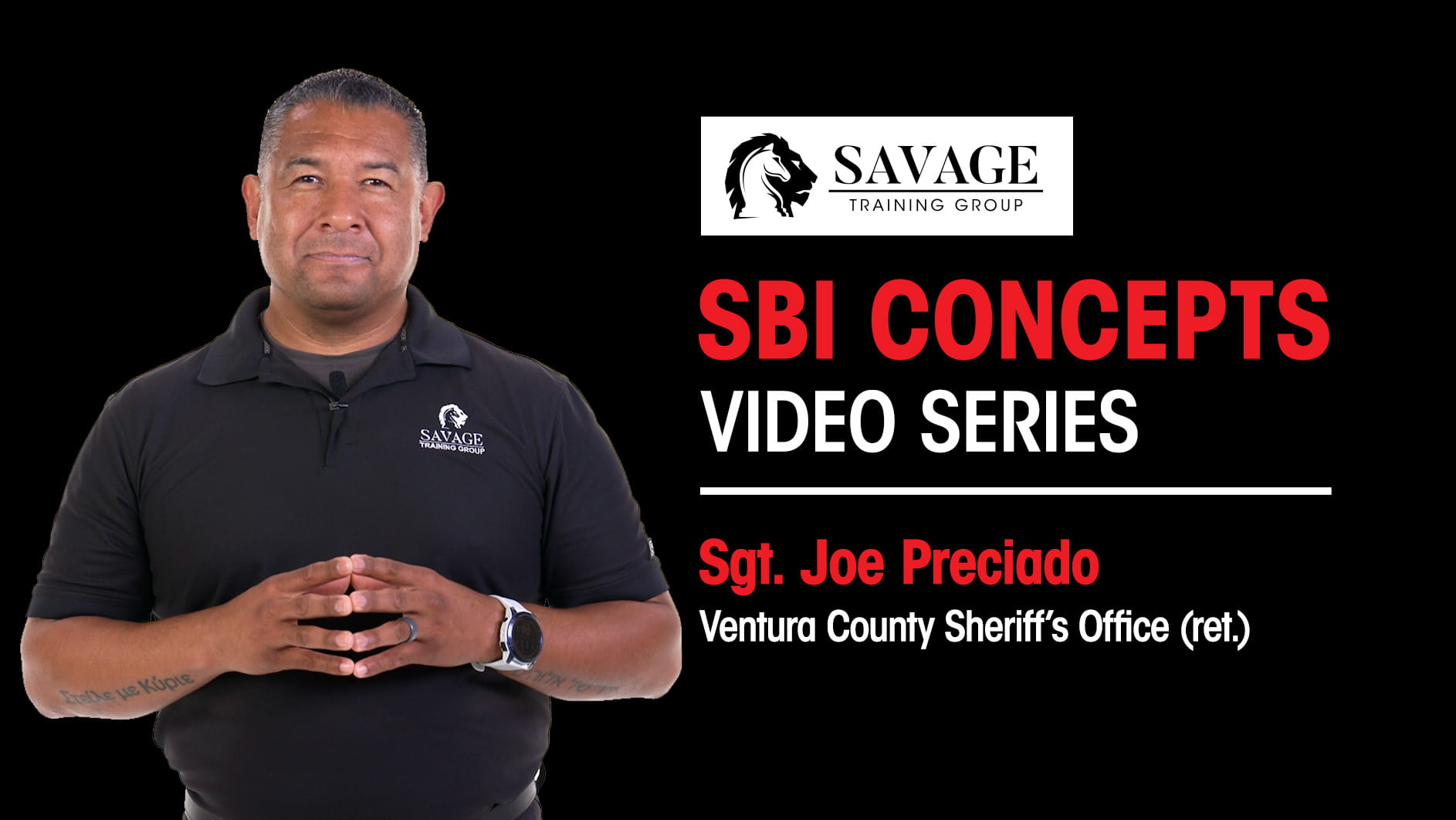
Plus get access to 14 refresher training videos featuring Senior Savage Training Group Instructor Joe Preciado!
The learning does not stop when the course ends. Each student receives 14 short refresher training videos, delivered once a week following the course. This spaced reinforcement helps students revisit key concepts, interrupt forgetting and retain more of what they learned.
These videos are a $99 value. We’re including them here at no additional charge for students who complete the course!
Upcoming Presentations:
Intro to Science-Based Interviewing
Oct 28 - 30 • Woodland, CA
Nov 10 - 12 • Joliet, IL
Nov 16 -18 • San Diego, CA
Dec 2 - 4 • Ventura, CA
Jan 12 - 14 • Livermore, CA
Want additional resources about research and legal developments affecting investigative interviews?

Attend this course to strengthen your interviewing skills and review legal developments affecting custodial interrogation, including California’s AB 2644 and relevant laws in Delaware, Illinois, Oregon, Utah, and other states.
Students are saying:
“Excellent course and instructors. This was like a superpower for communication!”
— Sgt. E. Ogihara, Kauai PD (HI)
“Excellent training class and excellent instructors. This course is a must!”
— Detective C. Corvo, Miami Beach PD (FL)
“My favorite part of the course was that there was no death by power point. The instructors used real examples form real cases.”
— Ofc. Sarah Miller, San Diego Harbor PD (CA)
“Take this course if you want to get better at getting to the truth.”
— Detective Girmscheid, Lake County SO (IL)
"I supervise our major crimes detectives and recently sent three detectives to your Intro to Science Based Interviewing. Having attended several Savage Training Group trainings myself, I had confidence the training and instructors would be top notch. You did not disappoint. All three of the detectives came away excited to try the new techniques they learned. Not only did I hear about the material presented, but I also heard how outstanding the instructors were. Whenever you can send three detectives to a three-day class and have them come back saying, “That is the best training I have ever attended”, I know I got my money's worth."
— Sgt J. Phipps, California Highway Patrol
"Before this training I was frustrated because I had little to no plan when I was going into interviews. This course solved that! Now I have legitimate tools to use and a plan."
— Ofc. J. Janowczyk, Healdsburg PD (CA)
“Before this course I didn't feel confident, but this training taught me how to prepare for my interview, start to finish. It was a great learning experience and a must-attend course.”
— Ofc. G. Matagiese, Kauai PD (HI)
"My favorite part of the course was the student interaction that kept everyone engaged. I'm excited to get to work to try these techniques and teach others."
— Ofc. Lupita Figueroa, Rohnert Park Dept. of Public Safety (CA)
“Please take this course. It’s super fun and super-informative!”
— Detective Y. Valdes, Hallandale Beach PD (FL)
“My favorite part of the course was the real interview videos and the final interview exercise.”
— Roselle PD Sergeant (IL)
“Excellent course and excellent instructors. This course should be mandatory.”
— Ofc. Elmore Spencer, Union City PD (CA)
“This course gave me a method to build rapport during interviews. Excellent instructors!”
— Sgt. A Maldonado, Hollywood PD (FL)
“Must attend. Great class.”
— Deputy Javier Acosta, San Mateo County Sheriff's Office (CA)
“I had no experience with interviews. This made me much more confident.”
— Deputy Aubrey Phillips, Alameda County Sheriff's Office (CA)
“My favorite part of the course were the real scenarios with instructors who can speak from real-world experience.”
— Ofc. H. Scott, Davie PD (FL)
“Learning T.E.D.S. and conversation launchers was great because now I have more tools to help me get the facts.”
— Officer Damien Wyrick, San Francisco Police Department (CA)
“Before this course I was feeling insufficient as an investigator but in this course I learned about T.E.D.S, the question funnel and conversation launchers and now I feel more confident to interview suspects and witnesses.”
— Deputy M.D., San Mateo County Sheriff's Office (CA)
Interviewing suspects can be challenging, particularly when time is limited and the facts are still developing. This course provides practical concepts that can be used immediately without requiring officers to memorize a rigid script. Students leave with a clear structure they can adapt to different people, cases and investigative settings.
Our Instructors
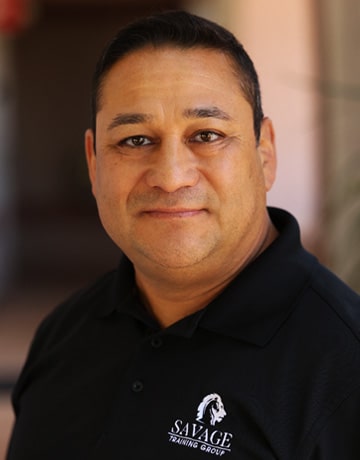
Instructor Max Garces is currently an Investigator assigned to the Homicide Division of the Fresno County District Attorney’s Office. He is a graduate of advanced Science-Based Interviewing training including being one of the only ORBIT-certified instructors in the U.S. As a working law enforcement officer in one of California’s toughest areas, Max understands the challenges today’s officers face. He’s ready to share everything he knows about interviews. You’ll benefit from a highly experienced instructor who has “been there and done that” but remains humbly committed to helping you do the same. More about Max
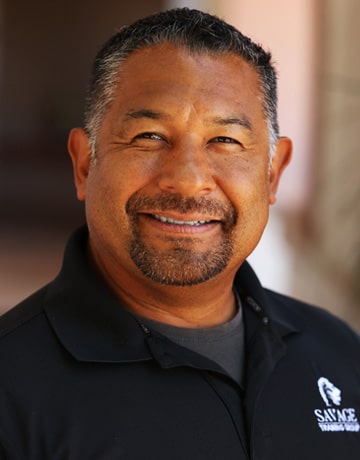
Senior Instructor Joe Preciado is a recently-retired Sergeant from the Ventura County Sheriff’s Office (CA) and graduate of advanced Science-Based Interviewing training courses. Joe’s detective experience includes General Felony investigator, Major Crimes Investigator working Sexual Assault and Child Crimes, and assignment to LAPD’S Internet Crimes Against Children Task Force. He's also a passionate instructor who is obsessed with making complex topics easy to understand for our students. More about Joe
What You Will Gain From This Course
Before Taking the Course
- “Suspects don’t want to talk to me.”
- “I don’t have time to do a long interview.”
- “Miranda, Beheler and all the rules are confusing.”
- “I struggle to apply interview training during my day to day work.”
After Taking the Course
- You’ll learn practical and legally sound ways to encourage a suspect to provide information.
- You’ll learn an efficient interviewing structure that can be used by patrol officers and detectives.
- You’ll better understand Miranda, Beheler and other legal issues affecting interviews.
- This practical course is designed for both patrol officers and detectives.
This is a practical and comprehensive interviewing course for law enforcement officers and public safety employees.
This course includes skill development in the following domains:
- Suspect, Victim, Witness and Informant Interviews
- Conversation Management
- Rapport Building
- Patrol vs. Investigations Settings
- The Strategic Use of Evidence
- Beheler / Miranda
- Behavior and Stress During Interviews
To register you must be a sworn law enforcement officer or public safety-affiliated employee.
How Is This Course Taught?
Concepts are presented through a clear and flexible structure that students can apply immediately. The course uses facilitated discussion, case examples, interview videos and practical exercises to keep students actively involved. The result is useful and engaging training for today’s law enforcement professionals.
Legal Considerations
What Investigators Need to Know:
Interview and interrogation law continues to evolve, particularly in areas involving juveniles, deception, promises and psychologically manipulative tactics. California’s AB 2644, for example, restricts specified tactics during custodial interrogations of persons 17 years of age or younger. Officers must also consider applicable case law, agency policy and guidance from their prosecuting authority.
This course reviews these legal and ethical issues while teaching practical methods for obtaining reliable information. The emphasis is on rapport, careful questioning, strategic use of evidence, corroboration, recording and giving the person a meaningful opportunity to explain the facts.